The context
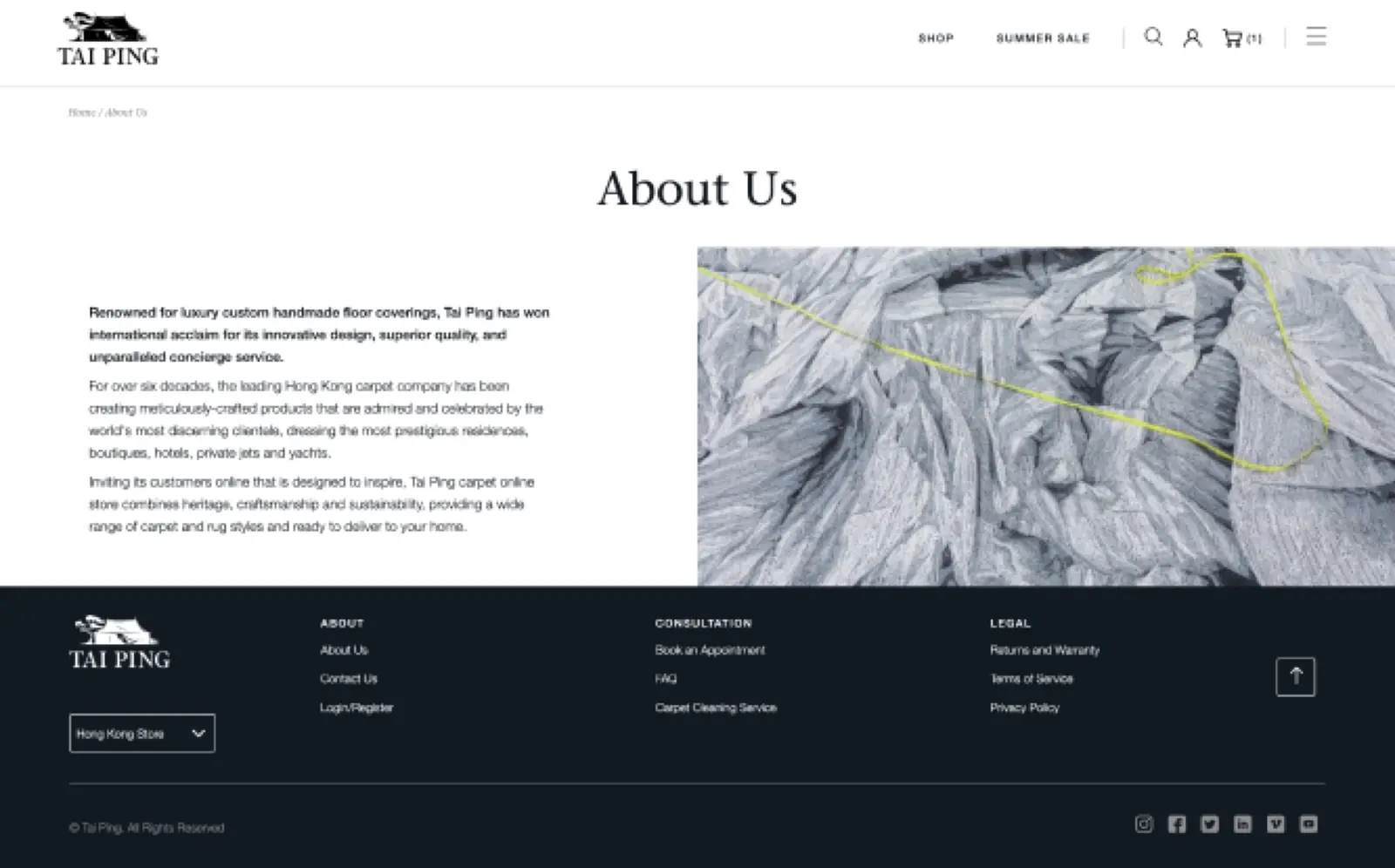
Tai Ping was founded in Hong Kong in 1956 and makes custom handmade carpets and rugs for private clients and businesses, across residential, commercial, yacht and aviation projects. Its carpets are understood through detail: materials, craftsmanship, history and the relationship between a design and its wider collection. For the design trade, exploring that detail has traditionally happened face to face.
Tai Ping and its sister brand, Edward Fields, wanted to change that. The aim was to give designers tools for their day-to-day work and a digital archive of designs they could use for inspiration and reference. Tai Ping also wanted to sell online, with a store that could serve Hong Kong and then other regional markets.
Butter worked on both. We designed and built two global websites, one for Tai Ping and one for Edward Fields, which also served the design trade as a B2B platform. We then built Tai Ping's ecommerce on Craft Commerce, with stores for Hong Kong, the US, the UK and France.
The challenge
The hard part was bringing decades of carpet design online without losing the depth and service of the showrooms.
The archive was large and spread out. Thousands of designs, hundreds of collections and collaborators, and colour information sat across several existing sites. Each record could carry material information, background, collaborators and related editorial content. All of it had to be migrated into one system and standardised along the way, which meant restructuring the content and manual intervention.
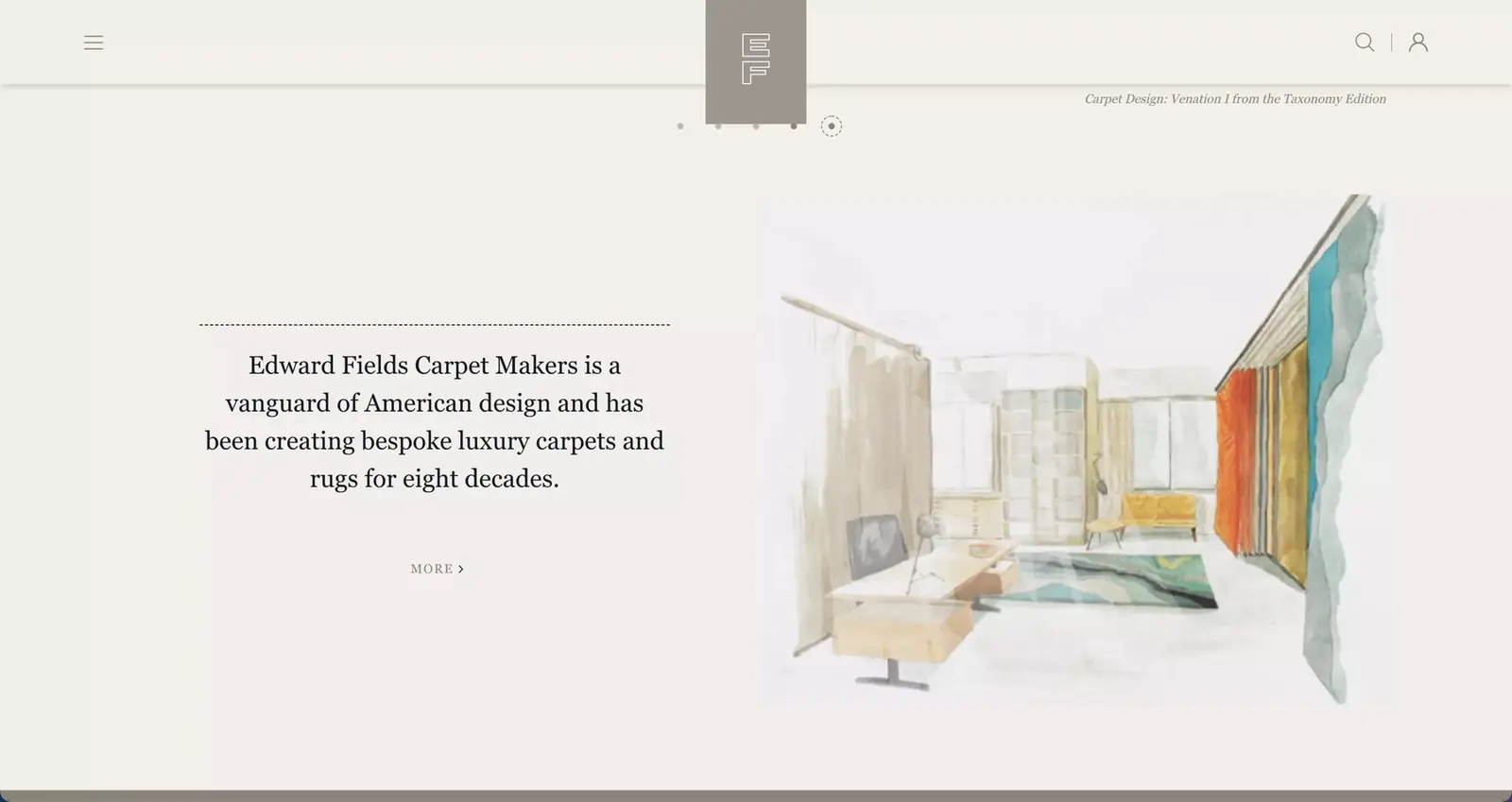
The two brands also needed to stay distinct. Butter was asked to create a separate interface design for each, while keeping the consistency both brands had built over decades.
There was no single user either. Consumers, interior designers, trade accounts and administrators each needed something different. The store added its own demands. It had to modernise Tai Ping's presentation without losing its classic design aesthetic. It also had to offer customers the range of designs, quality and concierge service they would find offline, while giving the Tai Ping team control of products, sales and logistics.
The approach
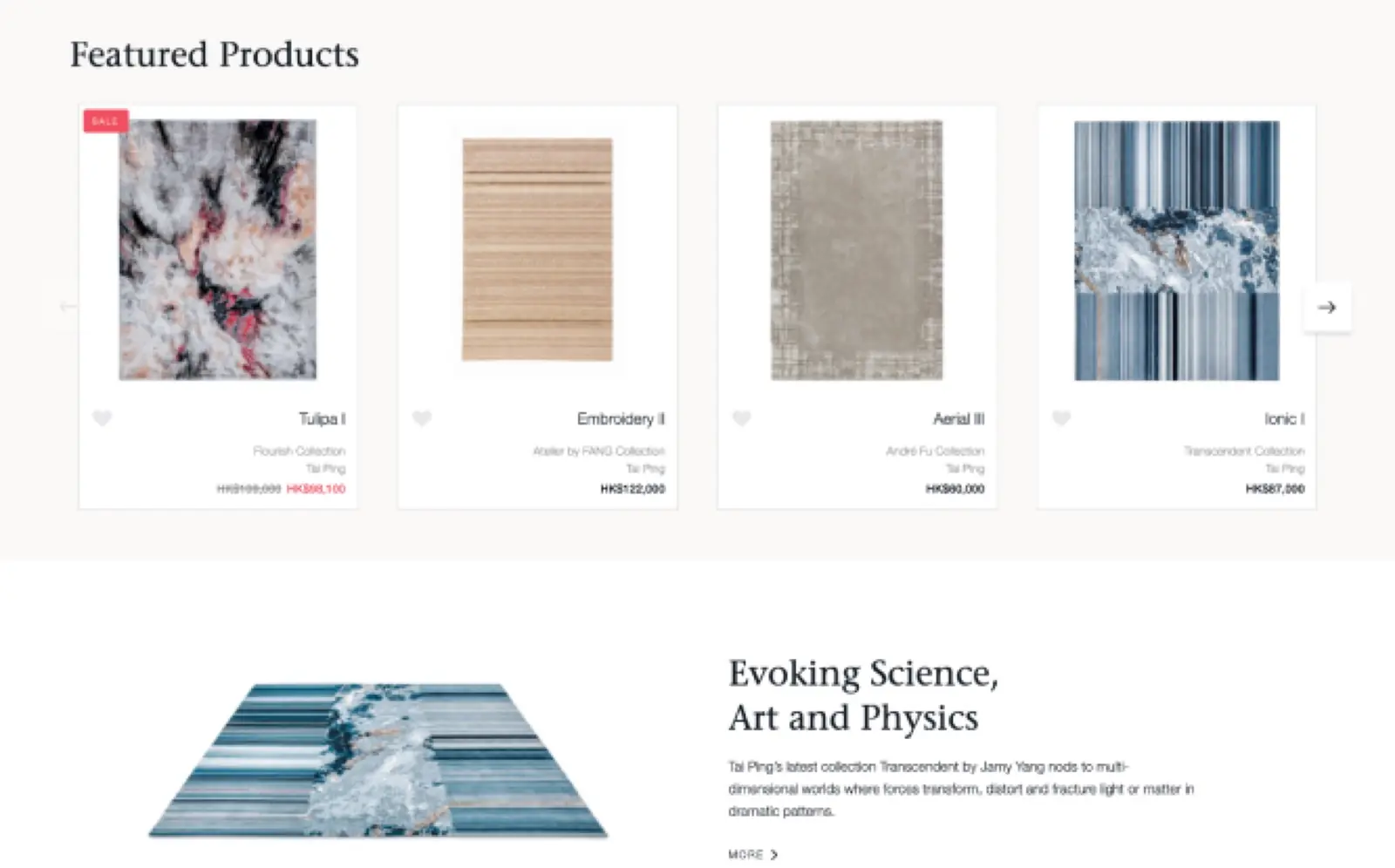
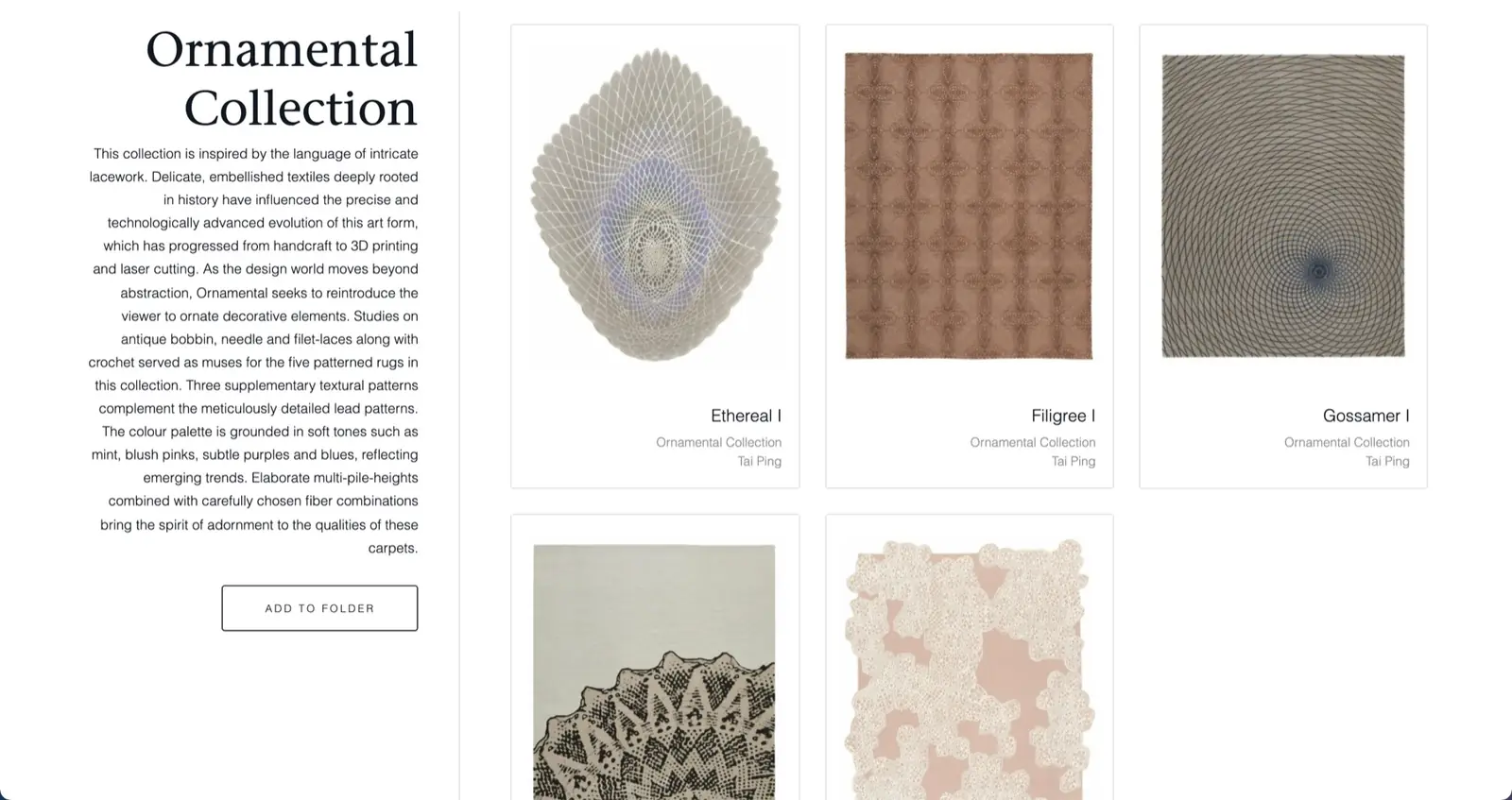
Discovery focused on how the design trade explores carpets: through the relationship between collections and individual pieces. Rather than treating the archive as a flat search result, Butter created a hierarchy that encouraged exploration. A visitor could enter through a collection, understand its point of view, then move into the materials and story of each carpet.
Search and content structure did the difficult work behind the scenes, so the interface could stay restrained and keep the carpets in focus.
Two brands on one CMS
Both global websites were built on Craft CMS using its multisite feature. The sites shared one backend and selected content, while each kept its own layouts and styles. Where a piece of shared content needed a different priority on each site, site-specific variables and templates handled it. Both brands could be managed from a single CMS without being forced to look alike.
Butter created custom tags and a tagging structure to keep a content-heavy archive manageable for the team. On the front end, Algolia let visitors search and filter across designs, collections and collaborators.
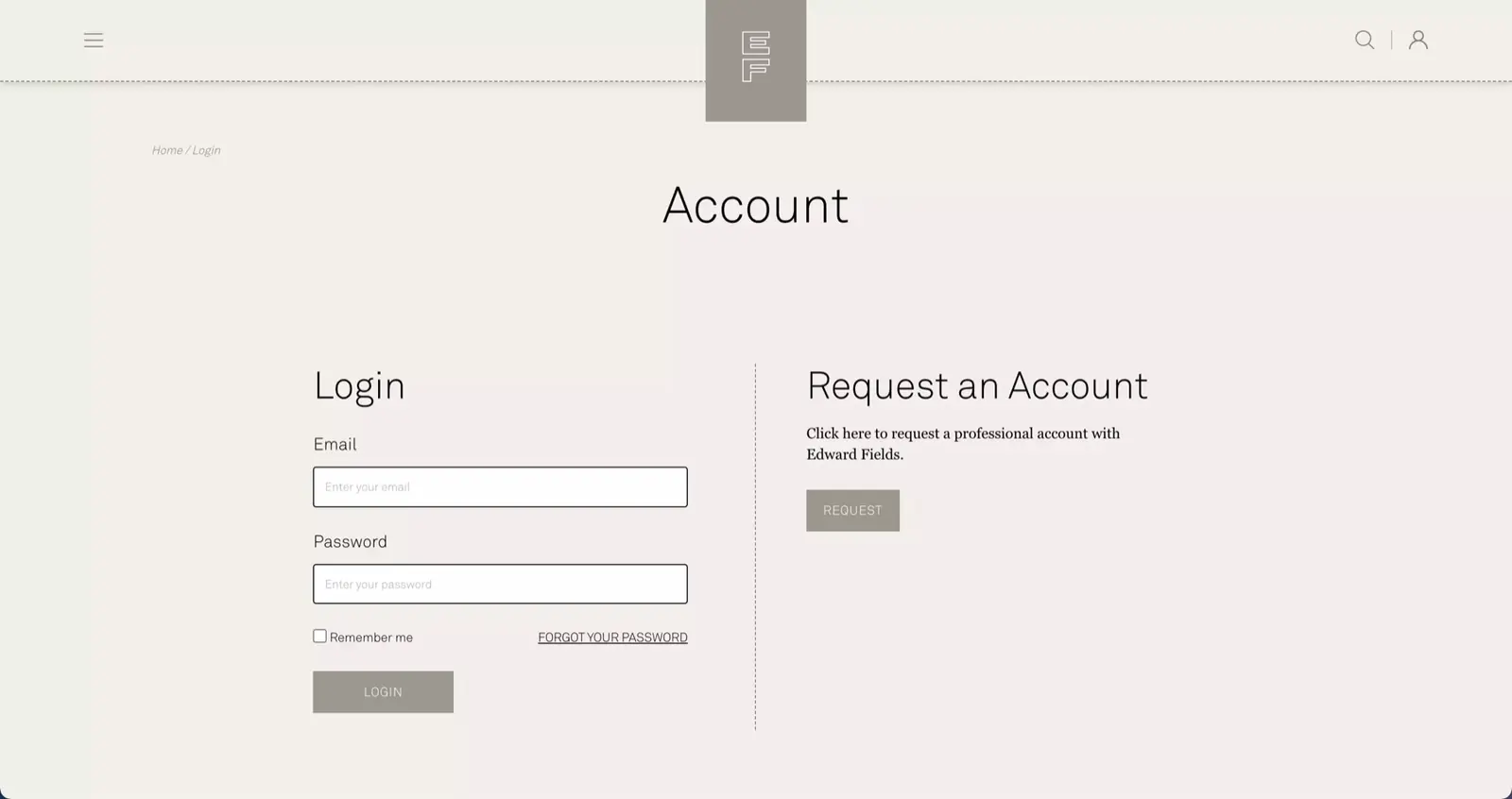
For the trade, the sites worked as a B2B platform, with access tiered through a custom plugin Butter developed. Professional Accounts were approved by members of Tai Ping's global team. Once approved, an account lifted content restrictions and unlocked features that personalised the experience, leaving Tai Ping's team in control of who saw restricted material.
Because both sites carried many large images, Butter continued working on speed and performance after launch.
One store setup for four markets
For ecommerce, Butter chose Craft Commerce. It allowed a fully custom front end alongside the back-end operational configuration Tai Ping needed, and gave the team control over logistics and operational processes. Just as importantly, the same setup could be reused for each regional store. After Hong Kong, it went on to run Tai Ping's stores in the US, the UK and France.
The CMS interface was kept simple, with just enough customisation for other teams and markets to use the same designs and functionality without rebuilding the structure from scratch.
Customers could choose pick-up or delivery, and payments ran through Stripe, with Visa, Mastercard, American Express, JCB, UnionPay and Alipay accepted. Because Tai Ping sells to both consumers and businesses, ecommerce customers, trade users and administrators each had a tailored experience.
What changed
Tai Ping's archive was no longer limited to people who could reach a showroom. Designers could explore the Tai Ping and Edward Fields collections online, and approved professionals could use the B2B platform to unlock restricted content and features.
Behind the scenes, both brands were managed from a single CMS, with a standardised archive and a custom tagging structure. Tai Ping's ecommerce launched on Craft Commerce in Hong Kong, and the same setup went on to run its stores in the US, the UK and France. Together, the work gave the Tai Ping team a clearer, reusable way to manage rich product content and ecommerce across four markets.